
Thyroid Symptoms in Women: A Checklist for Fatigue & Brain Fog
Feeling exhausted, mentally foggy, or unlike yourself can be frustrating, especially when you have already been told that your thyroid labs are within range. For women in Sarasota and the surrounding area, persistent symptoms can make it difficult to know what questions to ask next.
Thyroid symptoms in women can overlap with many other health concerns, so a checklist cannot diagnose the cause. It can, however, help you notice patterns and prepare for a more productive conversation with a qualified healthcare professional.
Fatigue, trouble concentrating, weight changes, hair thinning, mood changes, and menstrual changes deserve attention when they are persistent, new, or affecting daily life. The next step is not to self-diagnose. It is to gather clear information about what you are experiencing and discuss it with a provider who can evaluate the full picture.
Why thyroid symptoms can be confusing
The thyroid is a small gland in the neck that produces hormones involved in many body processes, including energy use, temperature regulation, heart rate, digestion, and metabolism.
When thyroid hormone levels are too low or too high, symptoms can vary from person to person. Many symptoms associated with thyroid concerns can also overlap with other issues, including poor sleep, stress, anemia, medication effects, nutrient deficiencies, mood concerns, pregnancy or postpartum changes, and other health conditions.
That overlap is one reason it is useful to track symptoms instead of relying on one symptom alone.
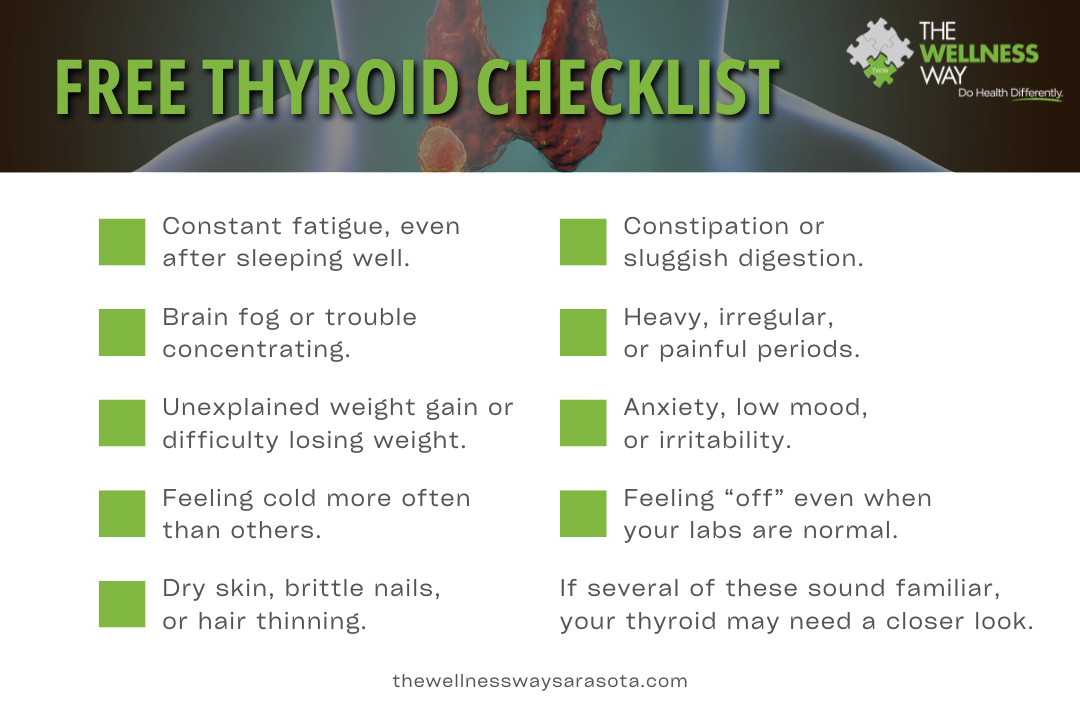
Thyroid symptom checklist for women
Use this checklist as a starting point. Check any symptoms that have been ongoing, changing, or interfering with your quality of life.
Energy and focus
Ongoing fatigue, even after what seems like adequate sleep
Brain fog, forgetfulness, or trouble concentrating
Feeling sluggish or less mentally sharp than usual
Low motivation or difficulty keeping up with usual routines
Temperature, weight, and physical changes
Feeling unusually cold compared with people around you
Unexplained weight changes
Difficulty with weight changes despite consistent habits
Dry skin
Brittle nails
Hair thinning or increased hair shedding
Digestion and body rhythms
Constipation or slower digestion than usual
Changes in appetite
Noticeable changes in sleep
Feeling more sensitive to heat or sweating more than usual
Mood and menstrual changes
Low mood, irritability, or increased anxiety
Heavy, irregular, or painful periods
Changes in cycle timing or flow
Feeling generally “off” without a clear explanation
Several items on this list do not automatically point to a thyroid condition. Still, recurring symptoms are worth documenting and discussing, especially when they affect work, relationships, exercise, sleep, or daily responsibilities.
What “normal” thyroid labs can mean
Thyroid testing is an important part of evaluating possible thyroid concerns, but lab results should be interpreted in context. A qualified healthcare professional considers symptoms, personal and family health history, medications, physical exam findings, and the specific tests that are appropriate for the situation.
For many people being evaluated for possible hypothyroidism, thyroid-stimulating hormone, often called TSH, is an important starting point. Free T4 may also be considered depending on the results and clinical situation. Other tests are not automatically necessary for every person.
If symptoms continue despite prior testing, it is reasonable to ask your provider questions such as:
Which thyroid tests have already been checked?
How do my symptoms and health history affect the next steps?
Could another health concern be contributing to my fatigue or brain fog?
Would repeat testing or additional evaluation be appropriate in my case?
Are any medications, supplements, life changes, or sleep habits relevant to my symptoms?
The goal is not to chase a diagnosis. It is to understand the most likely contributors and make informed decisions with appropriate medical guidance.
Watch OUR FREE thyroid webinar
In the webinar, we discuss common reasons women seek answers about fatigue, brain fog, weight changes, hair thinning, and cycle changes. It is designed to help Sarasota-area viewers and anyone watching online ask more informed questions and better understand why an individualized evaluation matters.
A practical next step in Sarasota
If persistent fatigue, brain fog, or other symptoms are affecting your day-to-day life, start with the checklist and symptom log above. If you are in Sarasota, Florida, The Wellness Way Sarasota is available to discuss your health history, current concerns, and appropriate next steps.
Learn more about thyroid dysfunction support or call (941) 702-0553 to ask about scheduling.
