
How to Improve Mobility as You Age: Daily Habits for Moving With More Confidence

Aging does not have to mean moving less, feeling stiff, or giving up the activities you enjoy. With the right daily habits, you can support better mobility, reduce discomfort, and stay active for longer.
If you have noticed that getting out of bed feels slower, your joints feel tighter, or simple movements take more effort than they used to, you are not alone. The good news is that small changes done consistently can make a meaningful difference in how your body moves and feels.
In this guide, we will cover simple ways to improve mobility as you age, why mobility matters, and what you can start doing today to support long-term movement and independence.
What mobility means and why it matters
Mobility is the ability to move your body through the ranges of motion needed for everyday life. It involves more than flexibility.
Healthy mobility draws on several pieces working together:
Joint movement and range of motion
Muscle strength and control
Balance and coordination
Posture and body awareness
Confidence during everyday movement
Recovery after activity
For example, getting up from a chair requires hip and ankle mobility, leg strength, balance, and coordination. Reaching for an item on a high shelf requires shoulder movement, upper-body control, and a stable base.
When one area feels limited, the body may compensate somewhere else. That can make certain movements feel awkward, stiff, or more demanding than they used to.
Mobility vs. flexibility: What is the difference?
Flexibility and mobility are related, but they are not the same thing.
Flexibility refers to how much a muscle can lengthen. Stretching your hamstrings is one example of flexibility work.
Mobility refers to your ability to actively control movement through a useful range of motion. For example, being able to bend, squat, or step up with control requires mobility.
Stretching can be part of a mobility routine, but mobility also benefits from strength, balance, and movement practice. That is why a balanced plan often works better than stretching alone.
Daily habits that may support mobility as you age
You do not need a complicated exercise plan to begin moving more. The habits below can be adjusted to fit your current abilities, schedule, and health history.
1. Begin the day with gentle movement
After sleeping, it is common to feel a little stiff or slow. A few minutes of gentle movement can be a comfortable way to transition into the day.
Try a short morning routine that includes:
A few minutes of easy walking around the house
Shoulder rolls or arm circles
Slow neck movements within a comfortable range
Hip circles while holding a counter for support
Ankle circles while seated
Sit-to-stands from a sturdy chair
The goal is not to push through pain. Start slowly and pay attention to which movements feel comfortable, restricted, or irritating.
2. Change positions throughout the day
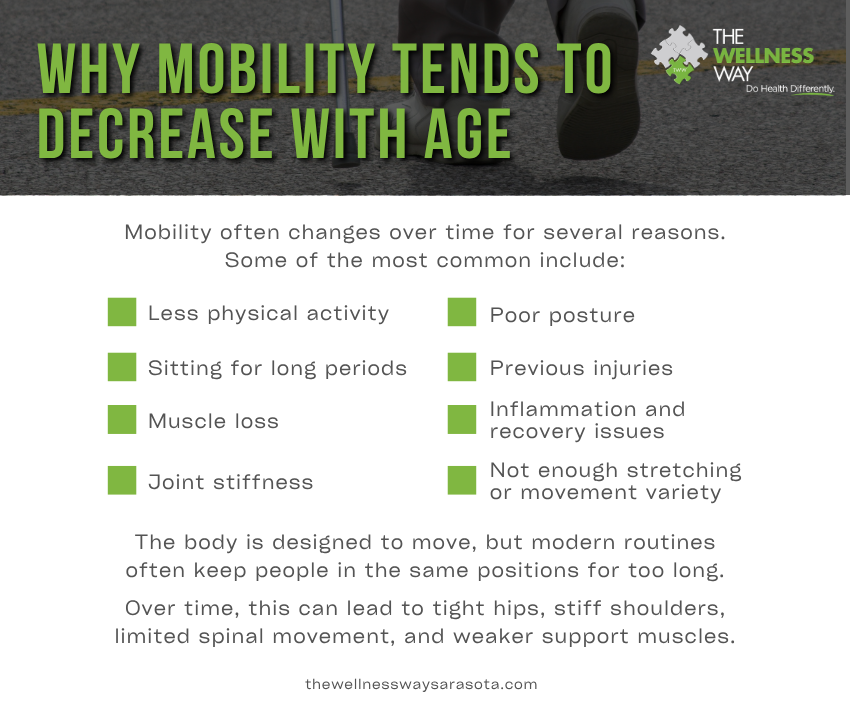
Long periods of sitting, standing, driving, or working at a desk can leave the body feeling stiff. Regular position changes give you more opportunities to move your joints and muscles through different ranges.
A simple approach is to stand, walk, or gently stretch every 30 to 60 minutes when possible.
Short movement breaks might include:
Walking to refill your water
Marching in place for one minute
Doing a few supported squats
Reaching overhead and taking a few slow breaths
Rolling your shoulders and gently turning your upper body
Taking a brief lap around the office or home
These small breaks add up, especially on days when a full workout is not realistic.
3. Make walking part of your routine
Walking is a practical form of movement that can be adapted for many fitness levels. It gives the legs and hips regular movement, supports cardiovascular fitness, and creates a natural opportunity to practice balance and coordination.
You do not need to begin with a long walk. A short walk after a meal, around the block, through a local park, or inside a shopping center can be a useful starting point.
If walking feels difficult right now, begin with a distance or time that feels manageable. Gradually build from there rather than trying to do too much at once.
4. Add controlled mobility exercises
Mobility exercises involve active, controlled movement. They are often useful before walking, strength training, gardening, golfing, or other activities that require you to move well.
A simple mobility routine may include:
Cat-cow movements for the spine
Supported deep squats to a comfortable depth
Thoracic rotations for the upper back
Hip openers
Controlled shoulder circles
Ankle circles or ankle rocks
Gentle leg swings while holding a stable surface
Seated or standing trunk rotations
Start with a few repetitions and focus on smooth control. Avoid bouncing, forcing a range of motion, or moving into sharp pain.
5. Strengthen the muscles that support daily movement
Muscle strength matters at every age. Stronger muscles can make everyday tasks feel more manageable, including getting up from a chair, carrying groceries, climbing stairs, and maintaining good control during walking.
You do not need to lift heavy weights to begin. Depending on your current ability, strength work may include:
Sit-to-stands from a chair
Wall push-ups
Step-ups using a stable step
Bodyweight squats with support
Resistance-band rows
Light dumbbell exercises
Carrying light objects with good posture
Machines or guided exercises at a gym
Choose movements that match your current level. If you are new to strength training, recovering from an injury, or managing a health condition, a qualified professional can help you select appropriate exercises and progress safely.
6. Practice balance in everyday ways
Balance is not only about standing on one foot. It also includes being able to shift your weight, turn, step over objects, walk on uneven surfaces, and recover your footing when your environment changes.
Simple balance practice may include:
Standing near a counter and shifting weight from side to side
Practicing heel-to-toe walking with support nearby
Standing on one foot while holding a sturdy surface
Sitting down and standing up with control
Taking slow, deliberate steps when changing direction
Safety matters. Keep a stable chair, counter, or railing close by when trying a new balance exercise. If you have had a recent fall, frequent dizziness, significant weakness, or feel unsteady, speak with a healthcare professional before starting a balance routine on your own.
7. Stretch the areas that often feel tight
Stretching may support comfort and range of motion when it is part of a larger movement routine. Many adults notice recurring tightness in the hips, chest, calves, hamstrings, shoulders, or upper back.
Focus on the areas that consistently feel restricted during your normal activities. Gentle stretching after a walk, workout, or warm shower may feel more comfortable than stretching when your body is cold.
Aim for a mild pulling sensation, not pain. Breathing slowly can make it easier to relax into a comfortable position without forcing the movement.
8. Support posture through movement, not perfection
Posture is not about holding one rigid position all day. The body generally benefits from changing positions, moving regularly, and building the strength to comfortably support daily activities.
During common tasks, notice whether you are:
Leaning forward for long periods at a desk
Holding tension in your shoulders
Looking down at a phone for extended periods
Standing with more weight on one leg
Avoiding movement because of stiffness or fear of discomfort
Small adjustments and regular movement breaks can be more practical than trying to maintain “perfect” posture all day.
9. Prioritize recovery habits
How you recover can influence how ready your body feels for movement. Sleep, nutrition, hydration, stress, activity level, and overall health can all affect muscle soreness, energy, and movement confidence.
Some supportive recovery habits include:
Drinking fluids consistently throughout the day
Eating regular, nourishing meals
Leaving room for rest after more demanding activity
Maintaining a consistent sleep routine when possible
Taking a lighter movement day after doing more than usual
Avoiding the urge to push through sharp, worsening, or unfamiliar pain
Recovery looks different for everyone. The goal is to create a routine you can repeat without feeling depleted.
10. Choose consistency over intensity
A 10-minute routine done most days is often more realistic than an ambitious plan that only happens once in a while.
Consider combining a few habits:
Five minutes of morning movement
A short walk after lunch
Two or three movement breaks during the workday
Strength training a few times each week
Gentle stretching in the evening
The best routine is one that fits your life, accounts for your current starting point, and can be adjusted as your needs change.
When to seek professional support
It may be time to seek individualized guidance if movement limitations are interfering with daily life or making you avoid activities you enjoy.
Consider speaking with a qualified healthcare professional if you experience:
Pain that is severe, persistent, or getting worse
Pain after a fall, accident, or other injury
Sudden weakness, numbness, or tingling
New or worsening balance problems
Repeated falls or fear of falling
Dizziness or fainting during activity
Significant swelling, redness, or warmth around a joint
Difficulty walking, standing, or getting in and out of a chair
A personalized evaluation may help identify potential contributors to restricted movement and clarify which next steps are appropriate for your health history and goals.
Mobility support in Sarasota, Florida
For Sarasota-area adults who want a more personalized conversation about stiffness, movement confidence, or everyday mobility concerns, The Wellness Way Sarasota offers a whole-body, individualized approach to chiropractic care and wellness support.
Care plans vary based on individual needs and health history. A conversation with the team can help you discuss your concerns, ask questions, and decide whether an evaluation is appropriate for you.
Book a free call with The Wellness Way Sarasota to learn more about your options.
