Breast Awareness vs. Breast Screening: What’s the Difference?
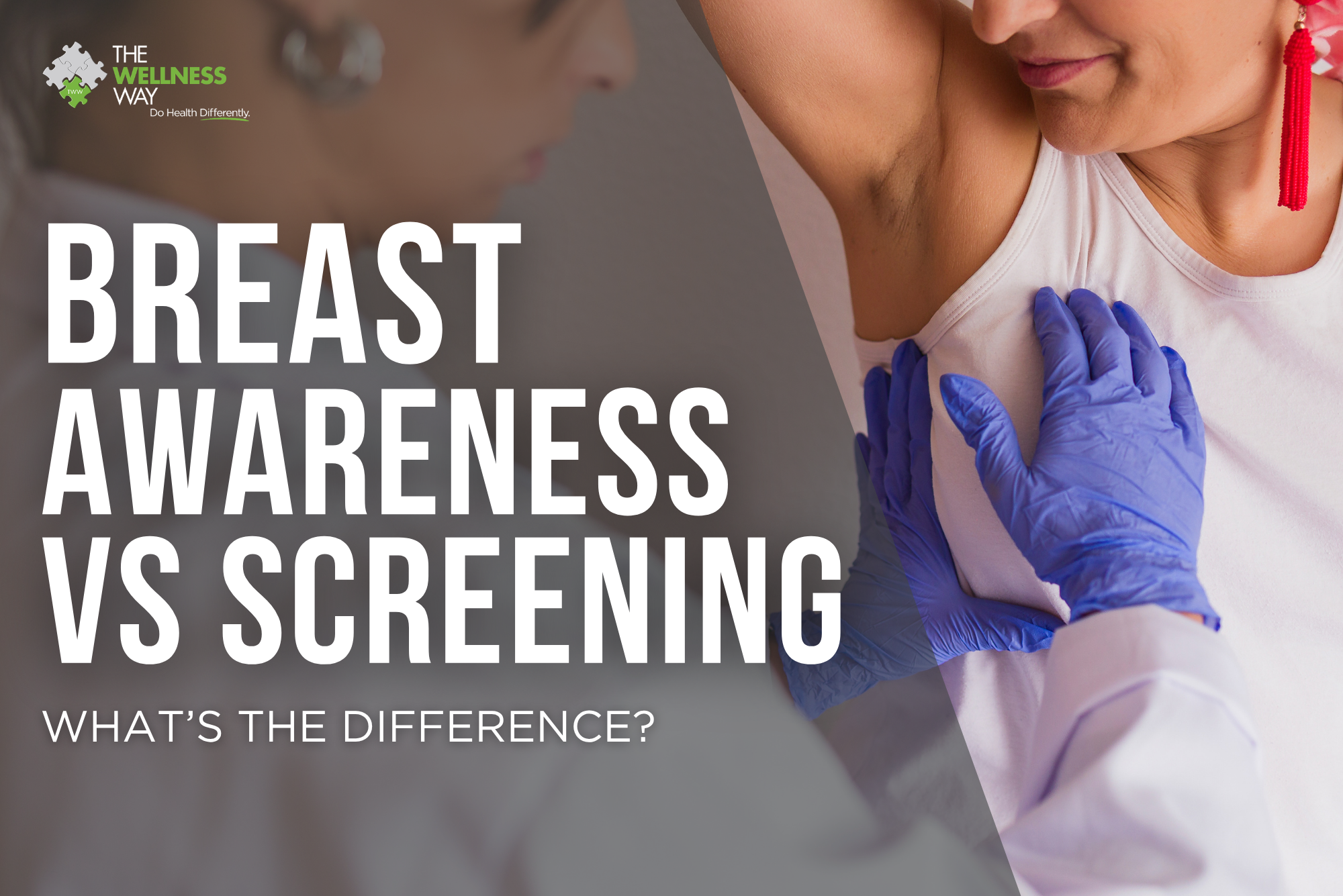
If you know how your breasts usually look and feel, does that mean you are keeping up with breast screening?
Not quite. Breast awareness means being familiar with your body and noticing changes. Breast screening uses medical tests to look for breast cancer when you do not have symptoms. They serve different purposes, and being familiar with your breasts does not replace a recommended screening plan.
Understanding the difference can make breast health conversations less confusing and help you know what to ask next.
What is breast awareness?
Breast awareness starts with knowing what is usual for you. You might notice a difference while showering, getting dressed, or going about your day.
It is not about diagnosing yourself or following a perfect checking routine. It is about recognizing something new and bringing it to a healthcare professional’s attention. Formal, routine breast self-exams are not generally recommended as a screening method because they have not been shown to reduce deaths from breast cancer.
Changes worth discussing include:
A new lump or thickening in your breast or underarm
A change in breast size or shape
Skin dimpling, swelling, or redness
A nipple that newly turns inward
New nipple discharge
New pain in one spot that does not go away
A change does not automatically mean cancer, but you cannot determine its cause by checking yourself. A healthcare professional can help evaluate it.
What is breast screening?
Breast screening looks for signs of breast cancer before obvious symptoms develop. Mammography is a standard screening method, and your recommended schedule depends on factors such as your age, health history, and risk.
Screening recommendations can differ between medical organizations. For example, the U.S. Preventive Services Task Force recommends mammograms every two years for women ages 40–74 at average risk. People at higher risk may need a different plan, so discuss what applies to you with your healthcare professional.
The important distinction is that screening is not something you only consider after finding a lump.
How they work together
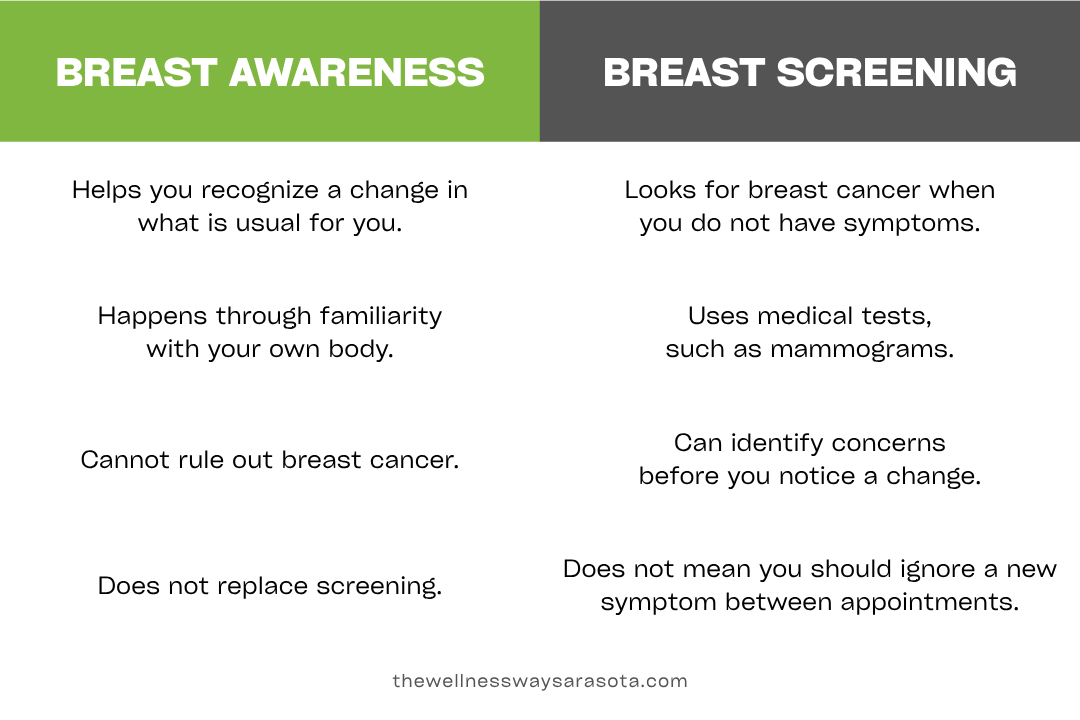
Both have a place in breast health conversations, but they are not interchangeable.
For example, if you notice a new lump before your next scheduled mammogram, contact a healthcare professional rather than waiting. Evaluating a symptom is different from routine screening, and your clinician can decide what examination or testing is appropriate.
Questions worth asking
You do not need to arrive at an appointment knowing every medical term. Start with questions that help clarify your next steps:
What screening schedule makes sense for me?
Does my personal or family history affect that plan?
Who should I contact if I notice a change between appointments?
If additional imaging is suggested, what question is it meant to answer?
Write down the answers if that helps. The goal is to understand your plan, not to memorize every possible test.
Join a breast health conversation in Sarasota
Understanding breast awareness and screening can leave you with questions about your own next steps. Join Think Beyond Pink: Breast Health, Hormones & Everyday Exposures at The Wellness Way Sarasota in Sarasota, Florida, on October 21, 2026.
This educational breast health event offers space to learn, ask questions, and connect with other women in the community. We’ll explore breast health, whole-body wellness, and everyday choices without the pressure to change everything at once.
